Calculate loading meters: formula, Euro pallet and calculator
Formula, Euro pallet, vehicles and calculator
Request a demoA loading meter is one meter of loading length across the full width of the loading area. You multiply the length and width of the load unit in meters and divide by the width of the loading area, usually 2.4 m. A Euro pallet therefore takes up 0.4 loading meters.
The loading meter shows how much space a shipment takes up on the loading area and often serves as the basis for freight costs.
Calculate loading meters
The formula
Loading meters = length × width in m × floor positions ÷ loading-area width in m
The calculation uses a loading-area width of 2.4 m. This is the usual calculation width; real bodies are often a little wider.
Stackable units need fewer floor positions: stacked two high, half as many, rounded up.
Loading length of common vehicles
- Truck up to 7.5 t (typical): 6 m loading length, so up to 6 loading meters
- Truck up to 12 t (typical): 7.2 m loading length, so up to 7.2 loading meters
- Articulated truck (40 t): 13.6 m loading length, so up to 13.6 loading meters
Load unit
Euro pallet: 120 × 80 cm, that is 0.4 loading meters per pallet
Worked example
33 Euro pallets, not stacked: 1.2 × 0.8 m × 33 ÷ 2.4 m = 13.2 loading meters. In loading length, this fits on: Articulated truck (40 t).
How many loading meters does a truck have?
A vehicle's loading meters equal its loading length. An articulated truck with 13.6 m loading length therefore has 13.6 loading meters. Smaller trucks have considerably less depending on the body; the typical values are shown with the calculator above.
How many pallets actually fit depends on how they are arranged, on the real inside width of the body and on whether you can stack.
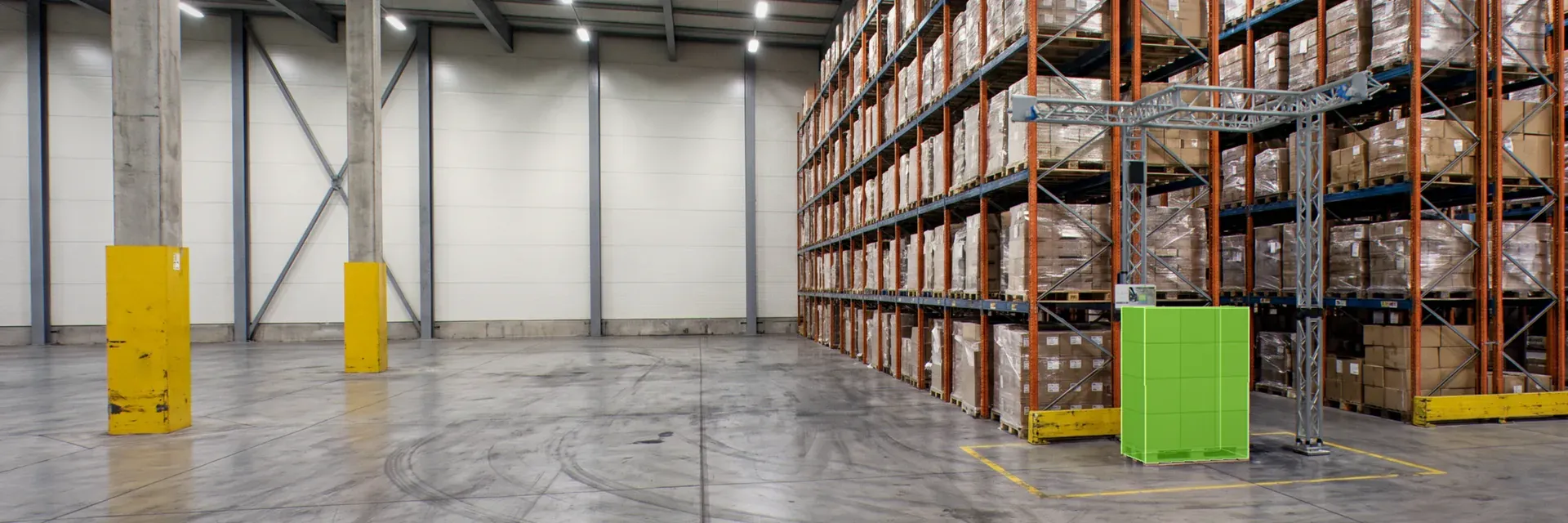 AI-generated
Why stackability changes the loading meters
A stackable pallet shares its floor position with a second one. A non-stackable pallet also takes up the space above it, and that counts when billing by loading meters. Without an automatic check, an employee decides by eye.
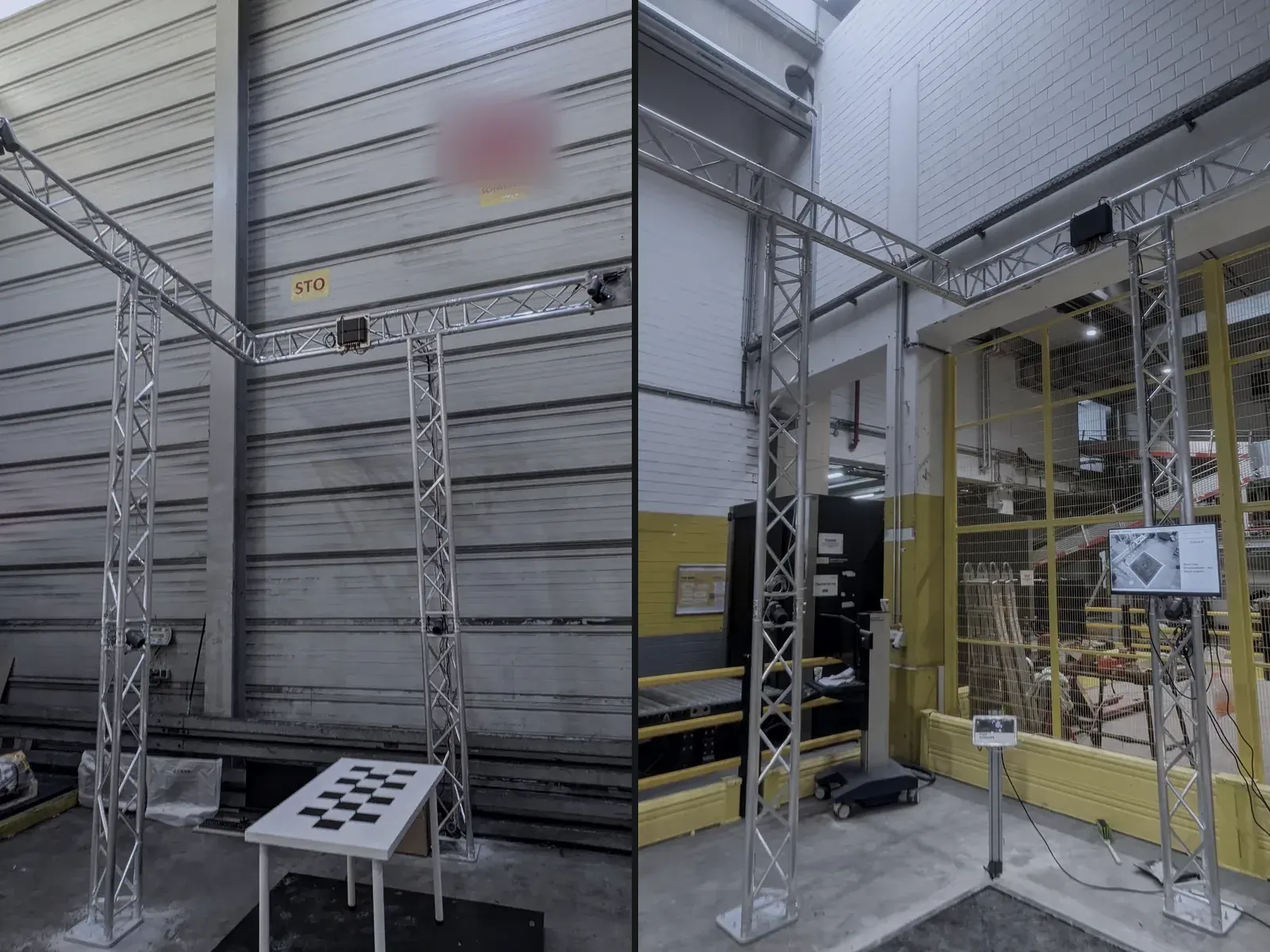
With the optional NSP Detection software module, the L23x and the L33x also capture the freight with color cameras on every measurement. The metrilus cloud then checks automatically whether the pallet is stackable. Every decision comes with a traceable justification and photos.
Loading meters or volumetric weight?
Loading meters count the length of loading area a shipment occupies, volumetric weight counts its volume. Which measure applies is set out in your tariff. How to calculate volumetric weight is explained on the page Calculate volumetric weight.
Frequently asked questions about loading meters
How do you calculate loading meters?
Length times width of the load unit in meters, times the number of floor positions, divided by the width of the loading area, usually 2.4 m. Stackable units stacked two high need only half as many floor positions, rounded up.
How many loading meters does a Euro pallet take up?
A Euro pallet takes up 0.4 loading meters when it is not stacked.
How many loading meters does an articulated truck have?
An articulated truck with 13.6 m loading length has 13.6 loading meters.
How many loading meters does a truck have?
As many as its loading area is long. An articulated truck has 13.6 m, a truck up to 12 t typically 7.2 m and one up to 7.5 t 6 m. The exact value depends on the body.
How do you convert loading meters into weight?
Some tariffs convert loading meters into a weight; your tariff sets the value per loading meter. Enter it in the calculator to see the loading-meter weight.
Why is the loading-area width fixed in the formula?
2.4 m is the standard calculation width for loading meters. Real bodies are often a little wider. If your forwarder calculates with a different width, enter it in the calculator.