Calculate volumetric weight: formula, divisors and calculator
Formula, divisors and calculator for pallets and parcels
Request a demoVolumetric weight, also called dimensional weight, is the weight a carrier charges for the space a shipment takes up. You multiply length, width and height in centimeters and divide the result by a divisor; in air freight, under IATA rules, by 6000. You are billed for the higher of actual weight and volumetric weight.
That way a light but bulky shipment pays for the space it takes up in the aircraft, the truck or the container.
Calculate volumetric weight
The formula
Volumetric weight in kg = length × width × height in cm × number of pieces ÷ divisor
You are billed for the higher of actual weight and volumetric weight.
Divisors
- Air freight (IATA): 6000 cm³ per kg
- Sea freight (customary): 1000 cm³ per kg
Worked example
A pallet of 120 × 80 × 150 cm weighing 180 kg, Air freight (IATA): 120 × 80 × 150 = 1,440,000 cm³, divided by 6000 gives 240 kg volumetric weight. As that is more than the 180 kg on the scale, 240 kg is billed.
Which divisor applies to you
The divisor depends on the mode of transport and on your contract. In air freight the IATA divisor is widespread, and in sea freight one metric ton per cubic meter is customary. Road freight forwarders and parcel services set their own divisors in their tariffs.
That is why the calculator has a field for your own divisor. You'll find the right value in your tariff or framework agreement, along with the rounding rule.
Why estimated dimensions cost money
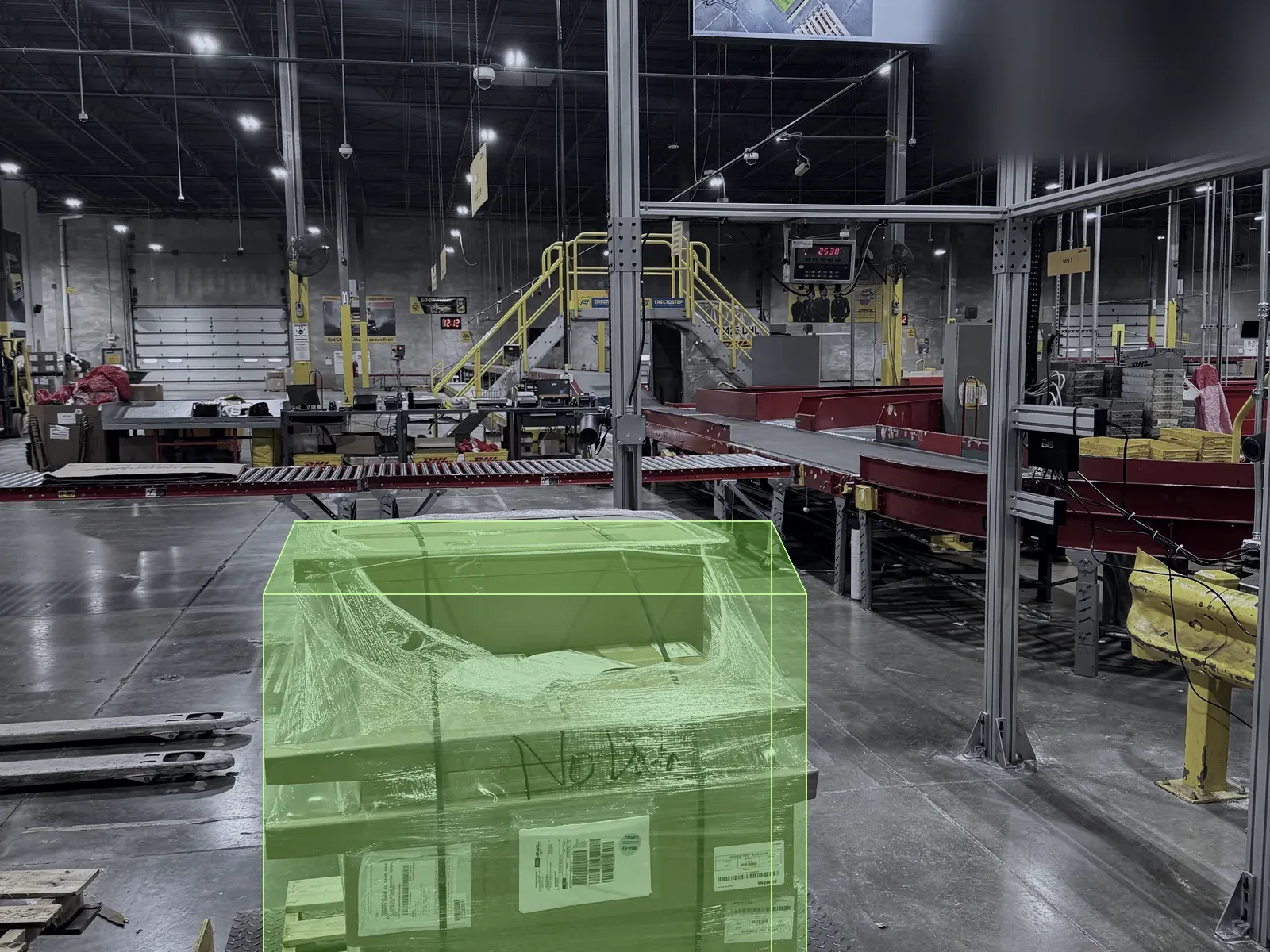
Volumetric weight grows with every side of the shipment. Just a few centimeters more in length, width and height add noticeably more kilograms to the invoice. Anyone who estimates or measures by hand risks rebills from the carrier and disputes over invoices.
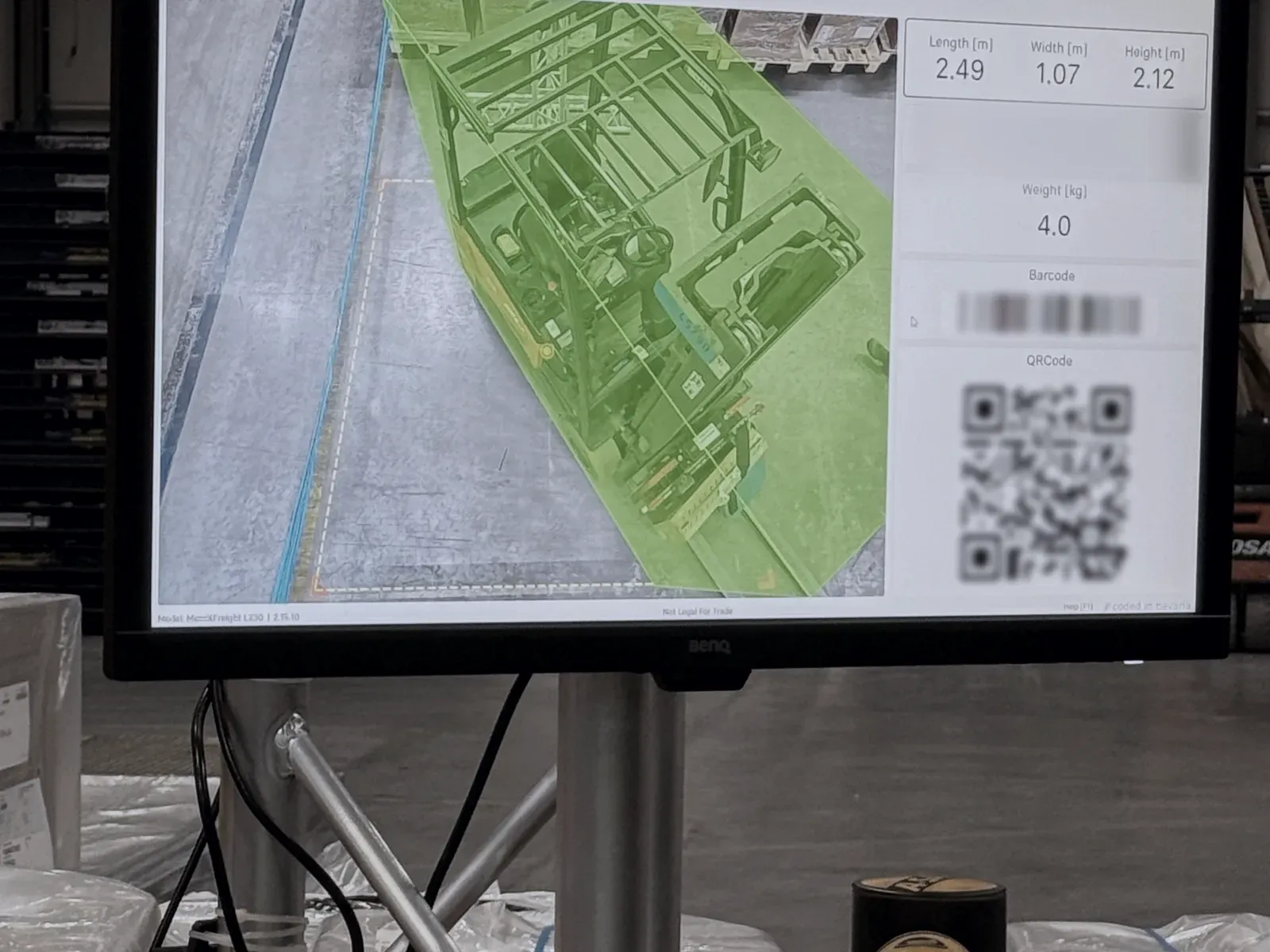
With automatically measured dimensions you know the volumetric weight of every shipment before it leaves your site.
Capture volumetric weight automatically
MetriXFreight measures parcels, pallets and long goods in around 200 milliseconds, and the weight too with a connected scale. The dimensions go via REST API straight into your WMS, TMS or ERP, where the volumetric weight is calculated with the divisor from your tariff. If you want to bill by the measured dimensions, you usually need legal-for-trade measurements. What that means is explained on the page Legal-for-trade volume measurement. Which system suits your freight is shown in the solutions overview. If your forwarder bills by loading area rather than volume, the page Calculate loading meters helps.
Frequently asked questions about volumetric weight
How do you calculate volumetric weight for shipping?
Length times width times height in centimeters and, for several identical pieces, times their number, divided by the divisor of your tariff. The result is the volumetric weight in kilograms. You are billed for the higher of actual weight and volumetric weight.
Which divisor applies in air freight?
Under IATA you divide the volume in cubic centimeters by 6000. Individual tariffs may differ. What your contract says applies.
What is chargeable weight?
Chargeable weight is the higher of actual weight and volumetric weight. The carrier sets the price on that basis.
How is volumetric weight rounded?
Each tariff sets this itself. The calculator on this page shows at most one decimal place and does not round to a tariff's weight breaks. You'll find the rounding rule in your tariff.
How do I make sure billing by volumetric weight is correct?
By measuring the dimensions of every shipment before it leaves your site instead of estimating them, and by using the divisor and rounding rule from your tariff. If you bill by dimensions yourself, you usually need legal-for-trade measurements.
How can I automate billing by volumetric weight?
An automatic dimensioning system captures the dimensions of every shipment, with MetriXFreight in the same step as the barcode scan. The dimensions go via REST API into your WMS, TMS or ERP, which can then calculate volumetric weight and chargeable weight with the divisor from your tariff.